The many benefits of eating raw nuts and seeds!
Part 2
What's in these nuts and seeds that make them so good for me?
Nuts and seeds are concentrated sources of protein, fats, B vitamins,
vitamin E, iron, magnesium and other minerals. Some of them contain
omega 3 fatty acids and as such can help to improve the balance of
cholesterol and the blood lipid profile and reduce the risk of heart
disease.
Some people have difficulty digesting nuts and seeds
and in this case, soaking them overnight initiates the sprouting process
and improves digestibility.

They are best consumed in limited
amounts if weight loss is desired or if digestive difficulties are
present, however in these situations the nuts and seeds rich in omega 3
fatty acids (flaxseed, walnut, chia and pumpkin seed) may be beneficial
as these fats can actually improve metabolism.
So here is a
list of nuts and seeds and the nutrients found in each. Make sure when
you purchase your nuts and or seeds that they are "RAW" and organic. Raw
seeds IMO are better tasting than the roasted version and far better
for you. Just remember to soak them first, in fact you can soak them is
Sea Salt water if you have to have that salty taste to your food. Enjoy!
Almonds are very high in minerals including calcium, magnesium,
potassium and iron and are the only nut that is alkaline forming in the
body. According to Ayurvedic medicine, almonds nourish the vital energy
of the body.
Almonds are also thought to contain a compound that is
anti-carcinogenic and for this purpose it is recommended that six
almonds are consumed daily.
Brazil nuts are rich in the sulfur
containing amino acids and selenium. Selenium has an important function
as an antioxidant and is involved in immunity.
Flaxseeds are
the richest source of omega 3 fatty acids and thus help to improve
immunity and reduce high cholesterol. When taken in the form of flaxseed
meal they effectively prevent constipation and are a source of lignans –
compounds that have antitumour and antioxidant properties. Flaxseeds
also help to balance estrogen levels.
1. Hazelnuts are very
rich in calcium, magnesium, iron, potassium, phosphorus, folic acid and
vitamin E. Hazelnuts act as a general tonic and strengthen the stomach.
2. Macadamia nuts are very high in fat and can contribute to weight
gain if consumed in excess. However in moderation they can help to
improve the balance of cholesterol due to their abundance of
monounsaturated fats. They are also very low in carbohydrates and as
such are suitable for low carb diets.
3. Pistachio nuts are
considered a tonic for the whole body in Ayurvedic medicine. They purify
the blood, lubricate the intestines and can be used for constipation.
4. Pumpkin seeds are known for their effects against intestinal
parasites especially roundworm and tapeworm. Their high zinc content may
explain the value pumpkin seeds for the treatment of impotence and
prostate enlargement.
Pumpkin seeds are also a valuable source of omega 3 fatty acids.
5. Sesame seeds are very high in calcium and are a good source of
magnesium, niacin, vitamins A and E, protein and unsaturated fats. In
the form of tahini (sesame seed paste) they provide the richest and most
bioavailable source of calcium.
6. Sunflower seeds are high in
protein, unsaturated fats, phosphorus, calcium, iron, fluorine, iodine,
potassium, magnesium, zinc, B vitamins, and vitamin E and are one of
the rare plant sources of vitamin D.
7. Walnuts are high in
protein, iron and contain omega 3 fatty acids. They can reduce
inflammation and pain, lubricate the lungs and intestines, and nourish
the brain and adrenal glands.
As you can see there are many benefits to eating raw nuts and seeds. They are nutrient dense and loaded with great energy.
High Intensity Training (HIIT) Part 1
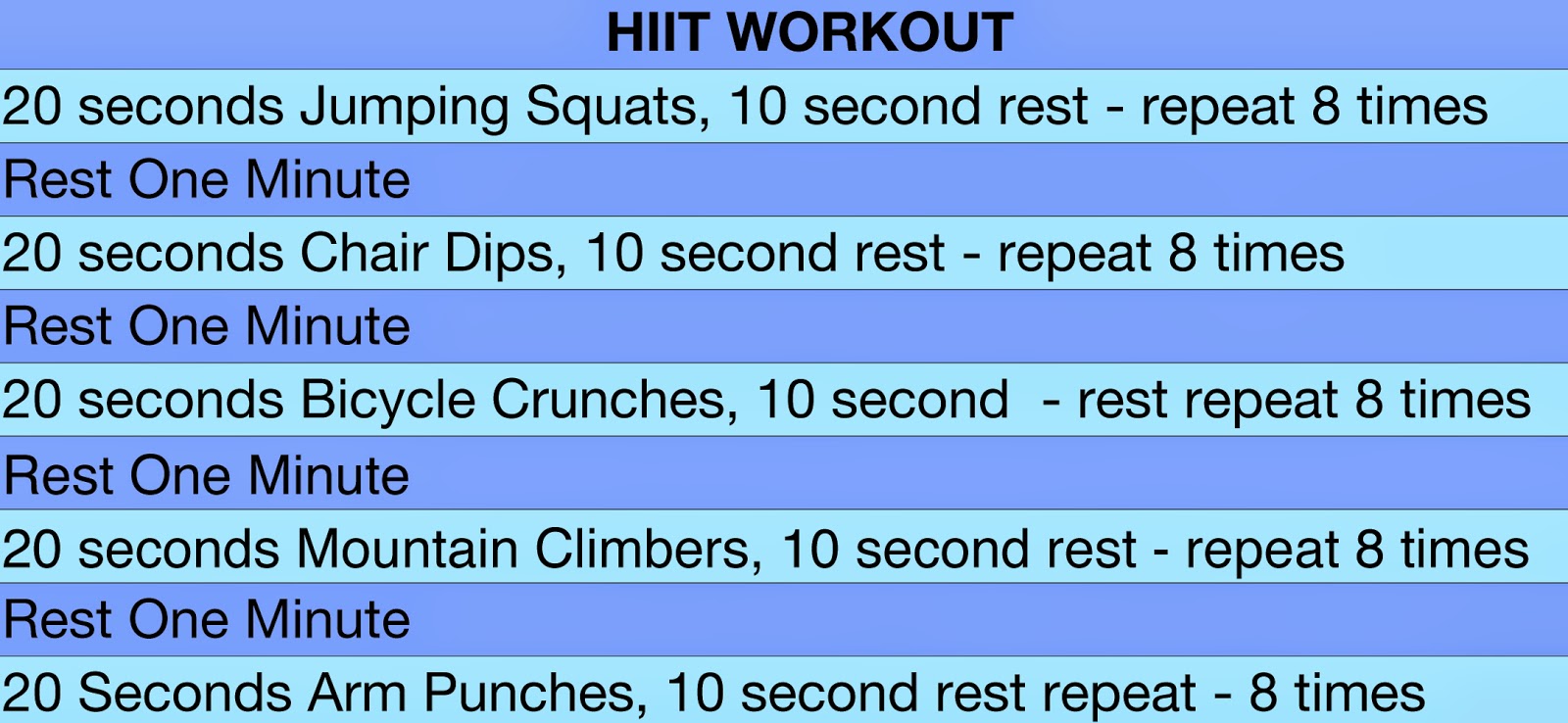
Follow these simple guidelines with your HIIT training and succeed in burning the fat while sparing the muscle.
Sensible Training Guidelines For High Intensity Training:
1. Perform 1-3 sets of 4-6 exercises for the lower body and 6-8
exercises for the upper body, and not more than 12 exercises in any
workout most of the time.
2.
Select a resistance for each exercise that allows you to do between
10-15 repetitions. Some may need 15-20 reps. Lower reps may be used at
times.
3. Continue each exercise until no additional
positive repetitions in good form are possible. When 15 or more
repetitions are performed, increase the resistance by approximately 5 %
the next workout. Go for overload.
4. Work the largest
muscles first and move quickly from one exercise to the next. This
procedure develops cardiovascular endurance.
5. Concentrate
on flexibility by slowly stretching during the first couple of
repetitions of a movement.
6. Accentuate the lowering portion (negative) of each repetition. If the weight stack is banging, you've lost control.
7. Move slower, never faster, if in doubt about the speed of an exercise. Don't move around in equipment while training.
8. Do everything possible to isolate and work each large muscle group to momentary overload. Don't hold your breath!
9. Attempt constantly to increase the number of repetitions or the
amount of weight or both. But do not sacrifice form in an attempt to
produce results. Train safe! Don't hold your breath! Your goal should be
to exceed the last workouts performance, in as many exercises as you
can.
10. Train no more than three times a week, Avoid over training!
11. Keep accurate records--date---resistance---repetitions---of each workout.
12. Use any equipment that you have----machines or free weights----
the main point is safety. The muscles do not have brains that tell them
if you are using machines or free weights, they only know resistance.
The myth that free weights are better than properly developed machines
is just that--a myth! Use advanced HIT principles sparingly, such as:
breakdowns, pre-exhaust, negative only, negative accentuated, 3X3's,
30's Day, forced reps and more.
Just what is a Calorie?
A calorie is a unit of energy. We tend to associate calories with food,
but they apply to anything containing energy. For example, a gallon of
gasoline contains about 31,000,000 calories.
So if you
understand that calories give you the energy to move and the sustenance
to build our bodies lets get a closer look at what these calories really
are!
Take the calories from
21 Big Mac Hamburgers and convert them into energy you would have enough
energy to drive a small car approximately 80 miles! So you see foods
harbor a great deal of energy. Eating the right type of calories at the
right time and your body will respond by building lean muscle and
burning fat. Eat the wrong calories at the wrong time and you will lose
muscle and gain fat.
Most of us think of calories in relation
to food, as in "This can of soda has 200 calories." It turns out that
the calories on a food package are actually kilocalories (1,000 calories
= 1 kilocalorie). The word is sometimes capitalized to show the
difference, but usually not. A food calorie contains 4,184 joules. A can
of soda containing 200 food calories contains 200,000 regular calories,
or 200 kilocalories. A gallon of gasoline contains 31,000 kilocalories.
The same applies to exercise -- when a fitness chart says you burn
about 100 calories for every mile you jog, it means 100 kilocalories.
For the duration of this article, when we say "calorie," we mean
"kilocalorie."
What Calories Do
Caloric Breakdown
1 g Carbohydrates: 4 calories
1 g Protein: 4 calories
1 g Fat: 9 calories
1 g Alcohol: 7 calories
Human beings need energy to survive -- to breathe, move, pump blood -- and they acquire this energy from food.
The number of calories in a food is a measure of how much potential
energy that food possesses. A gram of carbohydrates has 4 calories, a
gram of protein has 4 calories, and a gram of fat has 9 calories. Foods
are a compilation of these three building blocks. So if you know how
many carbohydrates, fats and proteins are in any given food, you know
how many calories, or how much energy, that food contains.
If
we look at the nutritional label on the back of a packet of
maple-and-brown-sugar oatmeal, we find that it has 160 calories. This
means that if we were to pour this oatmeal into a dish, set the oatmeal
on fire and get it to burn completely (which is actually pretty tricky),
the reaction would produce 160 kilocalories (remember: food calories
are kilocalories) -- enough energy to raise the temperature of 160
kilograms of water 1 degree Celsius. If we look closer at the
nutritional label, we see that our oatmeal has 2 grams of fat, 4 grams
of protein and 32 grams of carbohydrates, producing a total of 162
calories (apparently, food manufacturers like to round down). Of these
162 calories, 18 come from fat (9 cal x 2 g), 16 come from protein (4
cal x 4 g) and 128 come from carbohydrates (4 cal x 32 g).
Our
bodies "burn" the calories in the oatmeal through metabolic processes,
by which enzymes break the carbohydrates into glucose and other sugars,
the fats into glycerol and fatty acids and the proteins into amino
acids. These molecules are then transported through the bloodstream to
the cells, where they are either absorbed for immediate use or sent on
to the final stage of metabolism in which they are reacted with oxygen
to release their stored energy.
The Basil Metabolic Rate (BMR)
Just how many calories do our cells need to function well? The number
is different for every person. You may notice on the nutritional labels
of the foods you buy that the "percent daily values" are based on a
2,000 calorie diet -- 2,000 calories is a rough average of what a person
needs to eat in a day, but your body might need more or less than 2,000
calories. Height, weight, gender, age and activity level all affect
your caloric needs. There are three main factors involved in calculating
how many calories your body needs per day:
1. Basal metabolic rate
2. Physical activity
3. Thermagenic effect of food
Your basal metabolic rate (BMR) is the amount of energy your body needs
to function at rest. This accounts for about 60 to 70 percent of
calories burned in a day and includes the energy required to keep the
heart beating, the lungs breathing, the kidneys functioning and the body
temperature stabilized. In general, men have a higher BMR than women.
Your Caloric Needs
As you now know, there are three main factors involved in calculating
how many calories your body needs per day: your BMR, physical activity
and the thermagenic effect of food.
The second factor in the
equation, physical activity, consumes the next highest number of
calories. Physical activity includes everything from making your bed to
jogging. Walking, lifting, bending, and just generally moving around
burns calories, but the number of calories you burn in any given
activity depends on your body weight. Click here for a great table
listing the calories expended in various physical activities and for
various weights.
The thermic effect of food is the final
addition to the number of calories your body burns. This is the amount
of energy your body uses to digest the food you eat -- it takes energy
to break food down to its basic elements in order to be used by the
body.
Calories, Fat and Exercise

So what happens if
you take in more or fewer calories than your body burns? You either gain
or lose fat, respectively. An accumulation of 3,500 extra calories is
stored by your body as 1 pound of fat -- fat is the body's way of saving
energy for a rainy day. If, on the other hand, you burn 3,500 more
calories than you eat, whether by exercising more or eating less, your
body converts 1 pound of its stored fat into energy to make up for the
deficit.
One thing about exercise is that it raises your
metabolic rate not only while you're huffing and puffing on the
treadmill. Your metabolism takes a while to return to its normal pace.
It continues to function at a higher level; your body burns an increased
number of calories for about two hours after you've stopped exercising.
Lots of people wonder if it matters where their calories come from. At
its most basic, if we eat exactly the number of calories that we burn
and if we're only talking about weight, the answer is no -- a calorie is
a calorie. A protein calorie is no different from a fat calorie -- they
are simply units of energy. As long as you burn what you eat, you will
maintain your weight; and as long as you burn more than you eat, you'll
lose weight.
But if we're talking nutrition, it definitely
matters where those calories originate. Carbohydrates and proteins are
healthier sources of calories than fats. Although our bodies do need a
certain amount of fat to function properly -- an adequate supply of fat
allows your body to absorb the vitamins you ingest -- an excess of fat
can have serious health consequences. The U.S. Food and Drug
Administration recommends that a maximum of 30 percent of our daily
calories come from fat. So, if you eat 2,000 calories a day, that's a
maximum of 600 calories from fat, or 67 grams of fat, per day.
This is the base foundation for understanding calories and how calories
play an important role in nutrition. Just remember not to get caught-up
counting the calories as much and you look at the nutritional value of
the calories you choose to eat.
The fat Loss Benefits of Green Coffee Bean

How Does Green Coffee Bean Work?
Green coffee bean contains polyphenols, including chlorogenic acids,
which, like grape seed extract and green tea, have antioxidant that help
the body neutralize harmful free
radicals. Research has also shown that the chlorogenic acid in green
coffee bean has an antihypertensive effect on rats and humans that
promotes normal blood pressure.
Unlike coffee beverages, green
coffee bean extract is low in caffeine and is not a stimulant.
Chlorogenic acids are also destroyed when coffee beans are roasted and
their benefits are not available in coffee drinks.
Chlorogenic
acids support the weight loss benefits of green coffee bean in a couple
different ways. First, promote balanced blood sugar by inhibiting the
release of glucose within the body. Secondly, chlorogenic acids boost
the metabolic output of the liver, which burns more fat. This dual
mechanism works to support lean body mass by hindering the absorption of
fat and weight gain.
In 2006, a study published in BMC
Complementary and Alternative Medicine examined the inhibition of fat
accumulation and weight gain in mice that were given green coffee bean
extract. Researchers noted that the mice had reduced visceral fat
content and body weight. It was concluded that green coffee bean extract
may be effective against weight gain and fat accumulation by preventing
fat absorption and activating fat metabolism in the liver.
In
2011, Gastroenterology Research and Practice published a meta-analysis
of 5 studies, which had examined green coffee bean extract as a weight
loss supplement. Although it was noted that more research was
appropriate, it was also concluded that aggregate data showed a
significant difference in body weight in the subjects of the studies who
had supplemented with GCE, compared with placebo, and that evidence
indicates that GCE can promote weight loss.
This conclusion
was supported by an early 2012 study published in The Diabetes Metabolic
Syndrome and Obesity journal that followed a group of 16 adults who
supplemented with green coffee bean for a period of 12 weeks, without
making any dietary changes. The results were significantly astounding.
During this time, subjects lost an average of 10.5% of overall body
weight and 16% of overall body fat, without any reported negative side
effects [6].
When it comes to losing weight, proper diet and
exercise are paramount to success. However, research shows that adding a
supplement like green coffee bean extract can increase weight loss
potential, in addition to the antioxidant benefit. As with all
supplements, for green coffee bean to be effective, it must be a pure,
organic 100% high grade coffee bean extract supplement manufactured in
the US with laboratory tests certifying the product’s potency and
quality.
SOURCE ARTICLE; THE GLOBAL HEALING CENTER.
References:
Suzuki A, Kagawa D, Ochiai R, Tokimitsu I, Saito I. Green coffee
bean extract and its metabolites have a hypotensive effect in
spontaneously hypertensive rats. Hypertens Res. 2002 Jan;25(1):99-107.
Ochiai R, Jokura H, Suzuki A, Tokimitsu I, Ohishi M, Komai N,
Rakugi H, Ogihara T. Green coffee bean extract improves human
vasoreactivity. Hypertens Res. 2004 Oct;27(10):731-7.
Watanabe
T, Arai Y, Mitsui Y, Kusaura T, Okawa W, Kajihara Y, Saito I. The blood
pressure-lowering effect and safety of chlorogenic acid from green
coffee bean extract in essential hypertension. Clin Exp Hypertens. 2006
Jul;28(5):439-49.
Shimoda H, Seki E, Aitani M. Inhibitory effect
of green coffee bean extract on fat accumulation and body weight gain
in mice. BMC Complement Altern Med. 2006 Mar 17;6:9.
Onakpoya I,
Terry R, Ernst E. The use of green coffee extract as a weight loss
supplement: a systematic review and meta-analysis of randomised clinical
trials. Gastroenterol Res Pract. 2011;2011. doi:pii: 382852.
10.1155/2011/382852. Epub 2010 Aug 31.
Vinson JA, Burnham BR,
Nagendran MV. Randomized, double-blind, placebo-controlled, linear dose,
crossover study to evaluate the efficacy and safety of a green coffee
bean extract in overweight subjects. Diabetes Metab Syndr Obes.
2012;5:21-7. doi: 10.2147/DMSO.S27665. Epub 2012 Jan 18.
Cold Weather Burns Fat!!!

What do low temps and hot peppers have in common? They both could help burn fat, a new study shows.
Exposure to cold and consumption of chemicals found in chili peppers
both appear to increase the number and activity of brown fat cells,
which burn energy, rather than store it as typical white fat cells do,
said Takeshi Yoneshiro, a researcher at Hokkaido University Graduate School of Medicine in Japan.
The study is the first to show that brown fat activity can be induced
in people who appeared to have very few or no brown fat cells, said Dr.
Clifford Rosen, a professor of medicine at Tufts University who wasn't
involved in the study.
Participants in the study who were
exposed to cold also had less "bad" white fat at the end of the
experiments, Rosen told Live Science.
In the new study,
researchers exposed eight people with little or no brown fat cells to
moderately low temperatures of 63 degrees Fahrenheit (17 degrees
Celsius) for two hours daily, over the course of six weeks. Compared
with the control subjects, who went about their normal lives, the
cold-exposed people had about 5 percent less body fat at the end of the
study, and also burned more energy when exposed to cold, according to
the study, which was published in August in the Journal of Clinical
Investigation.
The researchers also looked at people who ate
capsinoids, the active ingredient in chili peppers, for six weeks, and
found they also burned more energy than the control group when exposed
to cold, but didn't lose any more white fat than the control group.
Yoneshiro said the experiment might not have continued for long enough
to see white-fat-burning effects of the compounds. A previous study that
lasted 12 weeks found the capsinoid ingestion led to significant body
fat decreases in mildly obese people.
The new results help
explain the results from a recent study co-authored by Snitker, which
found that people who ate capsinoids had increased levels of fat
breakdown, and smaller waists after a six-week period, compared with
people who took placebos.
The brown and the beige
It
was once thought that brown fat, also known as brown adipose tissue
(BAT), was present only in babies. But three research groups
independently discovered in 2009 that brown fat exists in adults,
concentrated in the upper chest and neck of some adults, Rosen said. It
appears reddish-brown because it contains many mitochondria, cellular
factories that release energy, Rosen said.
In 2012, scientists
found yet another type of BAT called "beige fat," which is a subset of
brown fat but is formed from white fat cells. Rosen said that the "brown
fat" cells induced by cold and capsinoids are indeed likely beige fat,
because they don't show up on scans used to detect concentrated regions
of brown fat cells.
"The most interesting thing about this
study from a treatment point of view is the capsinoids," said Jan
Nedergaard, a physiologist at Stockholm University in Sweden who wasn't
involved in the study. Reduction of fat from cold exposure was expected,
he said, but "as everybody realizes, that's a difficult thing to put
into practice."
Drug development?
The study is
exciting because it suggests chemicals that induce brown fat could be
used to fight obesity, although they'd probably work better at keeping
healthy people from becoming fat, rather than making obese people
skinny, Nedergaard said. "Everybody would like to take a fat person and
make him slim, but that demands a high-burning capacity that BAT
probably doesn't have."
Capsinoids appear to induce brown fat
in the same way as cold, by "capturing" the same cellular system that
the body's nervous systemuses to increase heat production, Yoneshiro
said. Drug developers want to use similar drugs to activate this system,
but capsinoids themselves probably won't be used because they already
exist in nature and thus cannot be patented, a major way that
pharmaceutical companies make money, Nedergaard said.
Capsinoids come from "sweet" chili peppers that don't taste hot, but
produce some of the same physiological effects — for example, producing
sweat,

The Mighty Egg!
In the past, eggs have gotten bad press because of their cholesterol and fat content. Fact: Eating cholesterol does not elevate cholesterol levels and the fats found in eggs are healthy fats that help turn on the fat burning engine in our metabolism. . Few things match nature’s great engineering at packing such nutritional power in such a small, but deliciously satisfying package, particularly for those looking to build muscle or burn fat. The amino acid profile found in eggs is second to none! So stop throwing that nutrient dense yolk down the drain and take advantage of the healthy fats and added benefits of the protein and healthy fats found in that yolk!
Just one egg can supply over 12 percent of the daily recommended intake of protein. The quality of egg protein is so high that the World Health Organization (WHO) uses it as a reference standard against which the protein quality of all other food is judged. Egg protein is a complete protein and thus includes a number of amino acids such as leucine, isoleucine, valine, methionine, cysteine, lysine, tryptophan, and other essential amino acids that contribute to the repair and regeneration of muscle.
Fact: The more muscle you carry, the more calories you burn at rest, making it easier for you to lean out or lose weight or both.
Fact: Conjugated linoleic acid, or CLA, is derived from animal sources. Chickens fed their natural diet and raised organically produce eggs with higher levels of CLA. CLA has been found to have antitumor activity at levels achievable through your diet. In other animal studies, CLA has been shown to help with regulation of glucose and to decrease the percentage of bodyfat. CLA is found in the yolk of the egg. CLA also lowers cholesterol in the body! So why are you not eating the yolk again?
Fact: Some studies, where the cholesterol did increase, found it was the HDL or “good” cholesterol that was on the rise. The data has been so compelling that the American Heart Association was forced to retract its recommended ban on the consumption of eggs and, in fact, today considers their inclusion part of a healthful, balanced diet.
Fact: Omega-3 fatty acids include the essential fatty acid ALA, or alpha linolenic acid, and the conditionally essential fatty acid DHA, or docosahexaenoic acid. These polyunsaturated fatty acids are critical in helping the body reduce levels of inflammation. They are also critical in the maintenance of heart and brain health.
Fact: Additionally, DHA has been shown to turn on genes that increase fat burning while deactivating genes that increase fat storage.
Fact: Eggs contain a plethora of other important nutrients including a number of minerals, vitamins, carotenoids and choline. The majority of these are found in the yolk, with the exception of vitamin B2 (riboflavin) and B3 (niacin). They contain heart- and brain-healthy fats, support muscle growth, and fat loss.
The next time you’re looking for a truly tasty treat that is nutritionally dense (the average egg clocks in at about 80 calories) and metabolically friendly (a glycemic index rating of low) it's time revisit the humble, but still incredible egg.
We recommend frying your eggs in coconut oil, this will add additional omega 3 fats into your diet and kick start your metabolism to burn fat all day long!
Start your day with an Anabolic Breakfast!
While you’ve likely heard breakfast is the most important meal of the day, let’s be realistic for a second. No meal is more special than the next; what you do during the course of the day or week is what matters most. Now, for those who love their breakfast, some recent research suggests you may want to rethink the amount of carbohydrates you include in that first meal. Your breakfast should be based on your current performance or physique goals.
You should also try to find something that you enjoy and won’t have a problem being consistent with. I recommend a high-protein breakfast with a moderate amount of dietary fat from medium-chain triglycerides, or MCTs. Here’s why: A recent study compared the results from three different breakfasts to determine how “anabolic” they are. The participants of the study had either protein only or protein plus carbohydrates, or fasted during breakfast.
The protein-only and fasting groups displayed significant increases in growth hormone, whereas the protein-plus-carbohydrate individuals showed no changes. Growth hormone is an essential part of your muscle-building goals, as it helps to spare amino acids in the body. Also, cortisol— your stress hormone—was lowered the most in the protein-only breakfast. So why include the MCTs? Medium-chain triglycerides are easily absorbed fats that, unlike normal triglycerides, can be used immediately for energy. Studies on MCT usage have shown increases in growth hormone, more fat being used for energy, and an increase in metabolism. Having some fat at breakfast may also shift the body toward using more fat as fuel during the course of the day.
ANABOLIC BREAKFAST OPTIONS
Coconut Oil: High in MCTs (66%), specifically lauric acid, which helps with cholesterol.
Organic Eggs: High in protein (and its associated leucine) as well as healthy dietary fat, which is high in omega-3s.
MCT Oil: Made of 100% MCTs and very easy to throw into a protein shake if you’re in a hurry.
Grass-Fed Beef: When cooked in coconut oil, it tastes amazing and delivers the protein and nutrients you need to grow muscle.
Any High-Quality, Low-Carb Protein Powder: Mix with water and a serving of MCT oil if time is an issue.
Fact: The MCT s in coconut oil have been shown to increase HDL (good) cholesterol, which can improve your overall cholesterol ratio.

 8 Proven Ways to Kick Fat Burning Into High Gear
1. HIIT Training
High Intensity Interval Training is one of the best fat-activating workouts on the planet! You expend more calories in less time, and you continue to burn calories for the 48-hour period following the workout. No matter what HIIT you do, it’s great for fat blasting!
2. Sprinting
Sprinting is the HIIT running workout, and it’s great for shredding your leg muscles as well as giving your body a fat-blasting boost. Add sprinting after a good workout–even a regular weightlifting session–and you’re guaranteed to burn through a s***load of fat in 20 minutes!
3. Sports
The beauty of sports is that they’re a lot of fun as well as great exercise. Start out your day with a pick-up game of basketball at the park, or play an hour after a good weightlifting workout. You’ll find the time flies by, and you’ll get an amazing cardio session while playing a game you love.
4. Hit the Weights, Hard!
Want to maximize fat burning in your workout? Do the following:
* Rest no more than 30 seconds between each set
* Work in the 12 to 15 or 20 to 25 rep range
* Keep your heart rate above 125 BPM
5. Switch It Up
Boredom is the arch-enemy of fat burning. The more variety you add to your workouts, the more faithful you’ll be. Don’t HIIT it every day, but throw in some weightlifting, Yoga, sprinting, and sports to mix things up and keep your workouts fresh.
6. Track Your Meals
Want to make sure you’re eating the right balance of carbs, protein, and fats? Instead of just guessing, track those meals to be 100% certain that you’re getting the right foods. The stricter you are with your diet, the faster you’ll be able to lose that extra weight.
7. Dry Out
Alcohol is the enemy of fat burning, so it’s time to go through a personal Prohibition. Ditch alcohol–and sodas along with it–and stick with only water. A bit of tea (using honey instead of sugar) or black coffee (ONE tablespoon of sugar at most) can be a good addition, but no juices, sodas, or drinks other than water.
8. Ignore the Scale
Your scales aren’t an indicator of how much fat you’re burning, so don’t worry about it. Studies have shown that weighing yourself every day helps you to be mindful of your diet, but it won’t help you measure fat-burning. Use it to help you form that good habit, but don’t let it tell you how you’re doing!
Great Advice for Adding Lean Muscle Weight to your Physique
1. Free Weights vs. Machines
While I have nothing against machines and cables, there is no doubt
that the greatest muscle builders are free-weight compound exercises,
like Squats, dead-lifts, bench press and
military overhead press There is nothing wrong with using machines or
cables, but if you want to see positive gains faster, make free-weights
the cornerstone of your program.
2. Use Proper Form
Using proper form on all of your exercises will assure that you are
stimulating the muscle that you wish to target. Those that “throw” the
weights up when doing side laterals or barbell curls, for example, are
only cheating themselves out of growth. Once you reach failure using
strict form, THEN it is ok to use momentum (to a reasonable degree) to
try and extend your set a bit further.
3. Don't Over-train
Our bodies have limited amounts of recovery ability, as well as a
limited amount of “energy” to put toward building new muscle tissue. So,
here a few sub-guidelines to follow to keep you from overdoing it.
A. Train no more than 4 days per week.
B. Do not train more than 2 days in a row without taking a full day off from the gym.
C. Workouts should last no more than 45-60 minutes.
4. Eat Adequate Amounts Protein
This is perhaps the most important of all the advice. Muscle is
protein. Protein is required to build and repair muscle tissue. Not
eating enough can hinder your gains no matter how well thought out your
training and supplementation programs are. How much protein is enough?
For most serious trainees, at least .8 to 1.5 grams of protein per pound of lean body-weight should be consumed daily.
5. Use the Right Supplements
While it is not 100% necessary to use supplements in order to make
progress, they certainly can hasten results. Things such as Magnesium
Citrate, Kre-Alkalyn, BCAA’s, L-Glutamine, (NO Nitrous Oxide),
L-Carnitine. may aid you in training, minimize recovery time and
increase ability to train harder.
6. Rest is as Important as the Training and Diet get your Sleep.
Fact: The only time the body can rebuild itself is when you sleep.
There are many hormonal functions that only occur when you body is in
total rest. For those of you that are really looking to make changes in
your physique sleep is the most crucial element in repairing the damage
you've done while training. The body disposes of waste in the muscle
cells and rebuilds the muscle that you tore apart in the gym. Not
getting ample amounts of sleep will impede your recover time and can
lead into an over-trained state and progress will come to a halt.

