Carbohydrate Addiction is Epidemic........Part3 Conclusion
Novel Flavor-Enhancers May Also Contribute to Food Addiction
Another guiding principle for the processed food industry
is known as “sensory-specific satiety.” Moss describes this as “the
tendency for big, distinct flavors to overwhelm your brain, which
responds by depressing your desire to have more.” The greatest
successes, whether beverages or foods, owe their “craveability” to
complex formulas that pique your taste buds just enough, without
overwhelming them, thereby overriding your brain’s inclination to say
“enough.”
Novel biotech flavor companies like Senomyx also play an important role.
Senomyx specializes in helping companies find new flavors
that allow them to use less salt and sugar in their foods. But does that
really make the food healthier? This is a questionable assertion at
best, seeing how these “flavor enhancers” are created using secret,
patented processes. They also do not need to be listed on the food
label, which leaves you completely in the dark. As of now, they simply
fall under the generic category of artificial and/or natural flavors,
and they don’t even need to be tested for safety, as they’re used in
minute amounts.
How to Combat Food Addiction and Regain Your Health
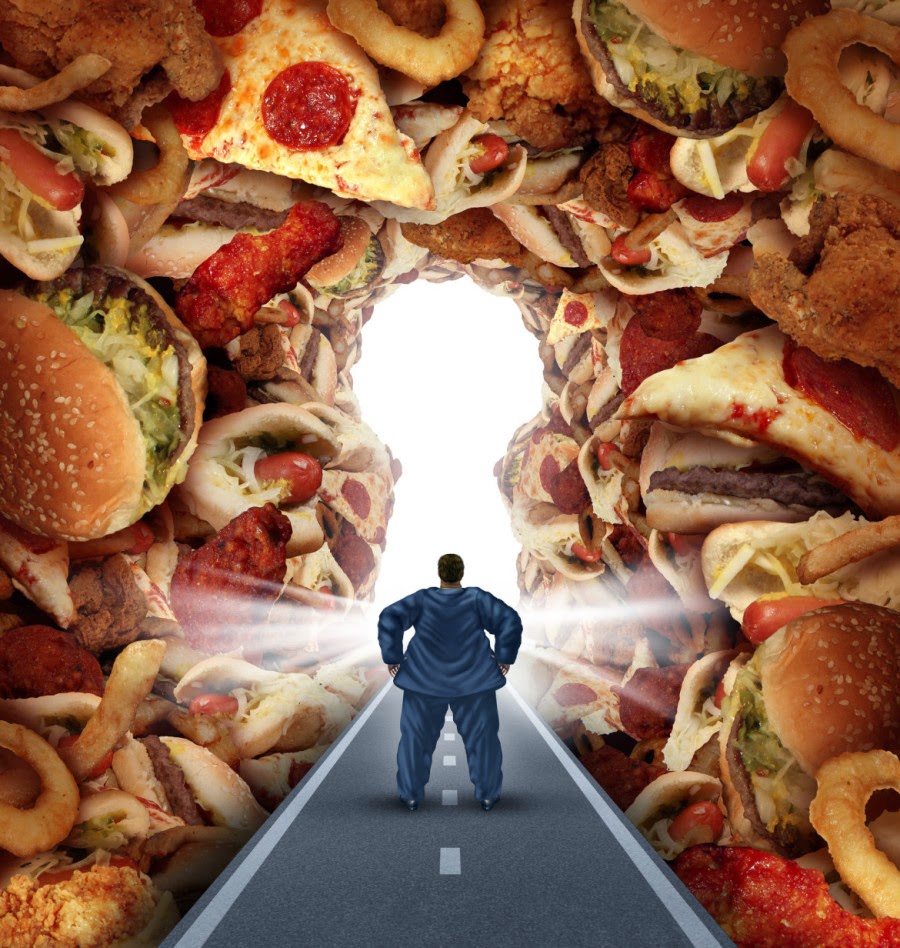
To protect your health, I advise spending 90 percent of your food
budget on whole foods, and only 10 percent on processed foods. It’s
important to realize that refined carbohydrates like breakfast cereals,
bagels, waffles, pretzels, and most other processed foods quickly break
down to sugar, increase your insulin levels, and cause insulin
resistance, which is the number one underlying factor of nearly every
chronic disease and condition known to man, including weight gain.
By taking the advice offered in the featured study and cutting out
these high-glycemic foods you can retrain your body to burn fat instead
of sugar. However, it’s important to replace these foods with healthy
fats, not protein—a fact not addressed in this research. I believe most
people may need between 50-70 percent of their daily calories in the
form of healthful fats, which include:
1. Olives & Olive oil
2. Coconut and Coconut Oils
3. Natural whole fat butter
4. Organic raw nuts, especially macadamia nuts, which are low in omega-6 fat.
5. Organic pastured eggs and pastured meats
6. Avocados
A growing body of evidence also suggests that intermittent fasting
is particularly effective if you’re struggling with excess weight as it
provokes the natural secretion of human growth hormone (HGH), a
fat-burning hormone. It also increases resting energy expenditure while
decreasing insulin levels, which allows stored fat to be burned for
fuel. Together, these and other factors will turn you into an effective
fat-burning machine.
Best of all, once you transition to
fat burning mode your cravings for sugar and carbohydrates will
virtually disappear, as if by magic... While you’re making the
adjustment, you could supplement L-Glutamine (1,000MG) before each meal
and 3,000-6,000 MG at bed time. This will help reduce cravings.
Other tricks to help you overcome your sugar cravings include:
Exercise: Anyone who exercises intensely on a regular basis
will know that a significant amount of resistance exercise is one of
the best "cures" for food cravings. It always amazes me how my appetite,
especially for sweets, dramatically decreases after a good workout. I
believe the mechanism is related to the dramatic reduction in insulin
levels that occurs after exercise.
Organic black
coffee: Coffee is a potent opioid receptor antagonist, and contains
compounds such as cafestrol -- found plentifully in both caffeinated and
decaffeinated coffee -- which can bind to your opioid receptors, occupy
them and essentially block your addiction to other opioid-releasing
foods. This may profoundly reduce the addictive power of other
substances, such as sugar.
Why Sugar is Toxic to the Body and in particular the BRAIN
Part 3 of 5.
SUCROSE: "PURE" ENERGY AT A PRICE

When calories became the big thing in the 1920s, and everybody was
learning to count them, the sugar pushers turned up with a new pitch.
They boasted there were 2,500 calories in a pound of sugar. A little
over a quarter-pound of sugar would produce 20 per cent of the total
daily quota. "If you could buy all your food energy as cheaply as you
buy calories in sugar," they told us, "your board bill for the year
would be very low. If sugar were seven cents a pound, it would cost less
than $35 for a whole year." A very inexpensive way to kill yourself.
"Of course, we don't live on any such unbalanced diet," they admitted
later. "But that figure serves to point out how inexpensive sugar is as
an energy-building food. What was once a luxury only a privileged few
could enjoy is now a food for the poorest of people."
Later,
the sugar pushers advertised that sugar was chemically pure, topping
Ivory soap in that department, being 99.9 per cent pure against Ivory's
vaunted 99.44 per cent. "No food of our everyday diet is purer," we were
assured. What was meant by purity, besides the unarguable fact that all
vitamins, minerals, salts, fibers and proteins had been removed in the
refining process? Well, the sugar pushers came up with a new slant on
purity. "You don't have to sort it like beans, wash it like rice. Every
grain is like every other. No waste attends its use. No useless bones
like in meat, no grounds like coffee." "Pure" is a favorite adjective of
the sugar pushers because it means one thing to the chemists and
another thing to the ordinary mortals. When honey is labeled pure, this
means that it is in its natural state (stolen directly from the bees who
made it), with no adulteration with sucrose to stretch it and no
harmful chemical residues which may have been sprayed on the flowers. It
does not mean that the honey is free from minerals like iodine, iron,
calcium, phosphorus or multiple vitamins. So effective is the
purification process which sugar cane and beets undergo in the
refineries that sugar ends up as chemically pure as the morphine or the
heroin a chemist has on the laboratory shelves.
What
nutritional virtue this abstract chemical purity represents, the sugar
pushers never tell us. Beginning with World War I, the sugar pushers
coated their propaganda with a preparedness pitch. "Dietitians have
known the high food value of sugar for a long time," said an industry
tract of the 1920s. "But it took World War I to bring this home. The
energy-building power of sugar reaches the muscles in minutes and it was
of value to soldiers as a ration given them just before an attack was
launched." The sugar pushers have been harping on the energy-building
power of sucrose for years because it contains nothing else. Caloric
energy and habit-forming taste: that's what sucrose has, and nothing
else. All other foods contain energy plus. All foods contain some
nutrients in the way of proteins, carbohydrates, vitamins or minerals,
or all of these. Sucrose contains caloric energy, period.
The
"quick" energy claim the sugar pushers talk about, which drives
reluctant doughboys over the top and drives children up the wall, is
based on the fact that refined sucrose is not digested in the mouth or
the stomach but passes directly to the lower intestines and thence to
the bloodstream. The extra speed with which sucrose enters the
bloodstream does more harm than good. Much of the public confusion about
refined sugar is compounded by language. Sugars are classified by
chemists as "carbohydrates". This manufactured word means "a substance
containing carbon with oxygen and hydrogen". If chemists want to use
these hermetic terms in their laboratories when they talk to one
another, fine. The use of the word "carbohydrate" outside the
laboratory-especially in food labeling and advertising lingo-to describe
both natural, complete cereal grains (which have been a principal food
of mankind for thousands of years) and man-refined sugar (which is a
manufactured drug and principal poison of mankind for only a few hundred
years) is demonstrably wicked. This kind of confusion makes possible
the flimflam practiced by sugar pushers to confound anxious mothers into
thinking kiddies need sugar to survive.
The use of the word
"carbohydrate" to describe sugar is deliberately misleading. Since the
improved labeling of nutritional properties was required on packages and
cans, refined carbohydrates like sugar are lumped together with those
carbohydrates which may or may not be refined. The several types of
carbohydrates are added together for an overall carbohydrate total.
Thus, the effect of the label is to hide the sugar content from the
unwary buyer. Chemists add to the confusion by using the word "sugar" to
describe an entire group of substances that are similar but not
identical. Glucose is a sugar found usually with other sugars, in fruits
and vegetables. It is a key material in the metabolism of all plants
and animals. Many of our principal foods are converted into glucose in
our bodies. Glucose is always present in our bloodstream, and it is
often called "blood sugar". Dextrose, also called "corn sugar", is
derived synthetically from starch. Fructose is fruit sugar. Maltose is
malt sugar. Lactose is milk sugar. Sucrose is refined sugar made from
sugar cane and sugar beet. Glucose has always been an essential element
in the human bloodstream. Sucrose addiction is something new in the
history of the human animal.
To use the word "sugar" to
describe two substances which are far from being identical, which have
different chemical structures and which affect the body in profoundly
different ways compounds confusion. It makes possible more flimflam from
the sugar pushers who tell us how important sugar is as an essential
component of the human body, how it is oxidized to produce energy, how
it is metabolized to produce warmth, and so on. They're talking about
glucose, of course, which is manufactured in our bodies. However, one is
led to believe that the manufacturers are talking about the sucrose
which is made in their refineries. When the word "sugar" can mean the
glucose in your blood as well as the sucrose in your Coca-Cola, it's
great for the sugar pushers but it's rough on everybody else.
People have been bamboozled into thinking of their bodies the way they
think of their check accounts. If they suspect they have low blood
sugar, they are programmed to snack on vending machine candies and sodas
in order to raise their blood sugar level. Actually, this is the worst
thing to do. The level of glucose in their blood is apt to be low
because they are addicted to sucrose. People who kick sucrose addiction
and stay off sucrose find that the glucose level of their blood returns
to normal and stays there. Since the late 1960s, millions of Americans
have returned to natural food. A new type of store, the natural food
store, has encouraged many to become dropouts from the supermarket.
Natural food can be instrumental in restoring health. Many people,
therefore, have come to equate the word "natural" with "healthy".
So the sugar pushers have begun to pervert the word "natural" in order
to mislead the public. "Made from natural ingredients", the television
sugar-pushers tell us about product after product. The word "from" is
snot accented on television. It should be. Even refined sugar is made
from natural ingredients. There is nothing new about that. The natural
ingredients are cane and beets. But that four-letter word "from" hardly
suggests that 90 per cent of the cane and beet have been removed.
Heroin, too, could be advertised as being made from natural ingredients.
The opium poppy is as natural as the sugar beet. It's what man does
with it that tells the story. If you want to avoid sugar in the
supermarket, there is only one sure way. Don't buy anything unless it
says on the label prominently, in plain English: "No sugar added". use
of the word "carbohydrate" as a "scientific" word for sugar has become a
standard defense strategy with sugar pushers and many of their medical
apologists. It's their security blanket.
If Your Metabolic Engine Has Stalled, It Could Be Inflammation
If your metabolism is stalled—or stuck in reverse—it would be helpful
to look at what might be keeping your body in a state of low-level
inflammation. It’s well established that weight gain is often a sign of chronic low-level inflammation, and frequently this is related to the foods you are eating.
Food sensitivities can lead you down the road toward insulin and leptin
resistance and can seriously hamper your metabolism.2 When you have a
food sensitivity or allergy, your body feels “attacked” by a food rather
than nourished by it.
Inflammatory molecules are then produced
and circulated to protect you from your body’s perceived threat,
causing you to decrease insulin and leptin sensitivity. Your body is
under stress so it uses its resources differently. This is typically
accompanied by a gut dysbiosis, an imbalance in the microorganisms in
your digestive tract.
In addition to food allergies and
sensitivities, inflammation can be caused by a number of different
factors, including poor sleep, environmental toxins, stress, and other
factors. Even overexercising may stall your metabolism by triggering
inflammation, pain, water retention, etc.
The foods most likely
to be pro-inflammatory are junk foods and highly processed foods,
grains, foods high in sugar (especially fructose), and GMOs. For help
with dietary strategies, please refer to my Optimized Nutrition Plan.
However, many people have food sensitivities to what would normally be
considered healthy foods, such as gluten, nuts, and dairy products.
It’s important to not rule out the possibility that you may be having
an unhealthy reaction to a “healthy” food. These food sensitivities can
be very subtle, so they can sometimes be challenging to identify,
requiring some trial and error.
Foods that can help reduce Inflammation.

Whey protein increases calorie burn and fat utilization, helps the body maintain muscle, and triggers the brain to feel full.
Protein in general has a tendency to rev up your metabolic engine due
to its thermogenic effects—meaning, it makes your body produce more heat
and in turn, burn more calories—but whey is particularly effective for
this.
A study published in the American Journal of Clinical
Nutrition found that fat oxidation and thermogenic effects are greater
with whey than with soy or casein.3
Consuming a high-quality,
rapidly absorbed, and easily assimilated whey protein concentrate, not
isolate within about 30 minutes of resistance training may maximally
stimulate muscle building in young healthy individuals, but this is
equally important, if not more so, for the elderly.
People tend
to lose muscle mass as they age. The leaner you are, the better your
metabolism will be, regardless of your age. There is only about a
two-hour window after exercise for optimal muscle repair and growth, and
supplying your muscles with the right food at this time is
essential—and whey is among the best.
Strength Training Is the Engine That Drives Fat Loss
Most adults need more muscle building activities, and strength training
(aka resistance training or weight training) is an excellent way to
achieve this. Working your muscles is the key to firing up your
metabolism—muscle contraction is the booster rocket of fat loss. Unlike
traditional cardio, strength training causes you to continue burning
more calories for up to 72 hours after the exercise is over through a
phenomenon called after-burn.
Not only does strength training
give your metabolism a boost, and increase your brain power but it’s
also an excellent way to reduce aches and pains, while at the same time
preventing osteoporosis and age-related muscle loss (sarcopenia). Light
walking is not enough to preserve optimal muscle tone, bone health, and
posture, so if you’re not engaging in strength training, chances are
you’ll become increasingly less functional with age.
Super-slow
weight training is a form of high-intensity exercise that has superior
metabolism-boosting benefits, especially for older individuals. What
does this involve? Basically, you just go much slower!
By
slowing down your movement, you’re actually turning it into a high
intensity exercise. The super-slow movement allows your muscles, at the
microscopic level, to access the maximum number of cross-bridges between
the protein filaments that produce movement in the muscle. Another
benefit of the super-slow technique is that it shortens your sessions to
12 to 15 minutes, just two to four of times per week.
Friendly Bacteria Can Help You Lose Weight
As mentioned earlier, health problems such as obesity, insulin
resistance, and heart disease are all rooted in inflammation, which must
be properly addressed if you wish to reach optimal health. Research
suggests there’s a connection between certain types of bacteria and body
fat. Bacterial imbalance in your gut can produce an exaggerated
inflammatory response, and toxic molecules (superantigens) produced by
pathogenic bacteria such as staph may play a role in the development of
type 2 diabetes due to their effects on your fat cells.
So, if
your metabolism has you feeling sloth-like, it may be that your gut
bacteria and fat cells are interacting to produce the “perfect storm” of
inflammation. A recent study published in British Journal of Nutrition
found that a certain strain of bacteria—Lactobacillus rhamnosus—seems to
help women lose weight and keep it off.4 This makes sense, given what
we know about lean individuals having different gut flora from obese
individuals.
Research also tells us there’s a positive-feedback
loop between the foods you crave and the types of organisms in your gut
that depend on those nutrients for their survival. Eating processed and
pasteurized foods worsens dysbiosis. Sugar, refined carbohydrates, and
junk foods promote the growth of disease-causing yeasts and fungi, and
cause certain bacteria to release endotoxins that drive inflammation,
resulting in metabolic changes that lead to overproduction of insulin,
increased appetite, excess fat storage, and obesity.
A
gut-healthy diet is one that eliminates sugars and processed foods and
is rich in whole, unprocessed, unsweetened foods, along with
traditionally fermented or cultured foods.
