Showing posts with label High Blood pressure. Show all posts

Monday, April 20, 2015

High Fructose Corn Syrup Linked to Kidney Stones: 5 Facts to Know


High Fructose Corn Syrup Linked to Kidney Stones: 

5 Facts to Know


A Message from our friends at The Global Healing Center

& 

Dr. Edward Group III


Since the late 1980s, HFCS has replaced regular table sugar, honey, and similar sweeteners. Prolonged consumption of HFCS is the topic of debate and, like other genetically modified products, may be bad for your health. A number of studies conducted over the past few decades indicate consumption of HFCS is connected with some health concerns.


1. Significant Risk of Weight Gain and Obesity

A study conducted by Princeton University [1], found that rats that were fed HFCS gained fat 300% more quickly than those fed an equal (or slightly larger) serving of fruit-derived sugar.

2. Increased Risk of Developing Type-2 Diabetes

Consumption of high-fructose corn syrup can lead to a huge increase in the likelihood of developing diabetes [2]. This life-long condition can be avoided in most cases. Excessive amounts of soda, energy drinks and junk-food aren’t worth losing a foot or going blind for.

3. Hypertension and Elevated “Bad” Cholesterol Levels

High-fructose doesn’t just make your body fat, it also makes your heart fat. There is a strong link between the irresponsible consumption of high fructose corn syrup and elevated triglyceride and LDL (bad cholesterol) levels [3]. Together, these can cause arterial plaque build-up and lead to heart problems including hypertension, heart disease, and even stroke.

4. High Fructose Corn Syrup and Liver Damage

This is a big one. Like anything else you eat or drink, your liver, gallbladder, and kidneys, processes HFCS. And it’s especially destructive to your liver. When combined with a sedentary lifestyle, permanent liver scarring can occur [4]. This greatly diminishes the organ’s ability to process out toxins and, over time, can lead to an expansive range of other negative health concerns. Another study suggests that HFCS may also cause fatty liver [5].

5. Mercury Exposure from HFCS

Did you know high fructose corn syrup is often loaded with alarmingly high levels of mercury? One study found mercury in over 50% of samples tested [6]. Mercury exposure can result in irreversible brain and nervous system damage – especially in young, growing bodies. Way too many foods aimed at children are LOADED with high fructose corn syrup!

Alternatives to High Fructose Corn Syrup

The dangers of high fructose corn syrup are both numerous and severe, if it’s in your diet, remove it. Some estimate more than one-third of the American food supply has been polluted by this trash. I urge you to read product labels and avoid those with HFCS. Replace HFCS with raw honey or Xylitol for sweetening needs.
– Dr. Edward F. Group III, DC, ND, DACBN, DCBCN, DABFM

References:

  1. Hilary Parker. A sweet problem: Princeton researchers find that high-fructose corn syrup prompts considerably more weight gain. Princeton University. 2010 March 22.
  2. American Chemical Society. Soda Warning-high-fructose corn syrup linked to diabetes, new study suggests. ScienceDaily 23 Aug. 2007.
  3. Jennifer K. Nelson R.D.,L.D. What is high-fructose corn syrup? What are the health concerns? Mayo Clinic. 2012 September 27.
  4. Duke University Medical Center. High fructose corn syrup linked to liver scarring, research suggests. ScienceDaily. 23 Mar. 2010.
  5. Laura G. Sánchez-Lozada, Wei Mu, Carlos Roncal, Yuri Y. Sautin, Manal Abdelmalek, Sirirat Reungjui, MyPhuong Le, Takahiko Nakagawa, Hui Y. Lan, Xuequing Yu, Richard J. Johnson. Comparison of free fructose and glucose to sucrose in the ability to cause fatty liver. European Journal of Nutrition. 2010 February. vol. 49 issue 1, pp. 1-9.
  6. Dufault R, LeBlanc B, Schnoll R, Cornett C, Schweitzer L, Wallinga D, Hightower J, Patrick L, Lukiw WJ. Mercury from chlor-alkali plants: measured concentrations in food product sugar. Environ Health. 2009 Jan 26;8:2. doi: 10.1186/1476-069X-8-2.

 

Monday, March 23, 2015

Carbohydrate Addiction is Epidemic........Part 3 Conclusion

Carbohydrate Addiction is Epidemic........Part3 Conclusion


Novel Flavor-Enhancers May Also Contribute to Food Addiction

Another guiding principle for the processed food industry is known as “sensory-specific satiety.” Moss describes this as “the tendency for big, distinct flavors to overwhelm your brain, which responds by depressing your desire to have more.” The greatest successes, whether beverages or foods, owe their “craveability” to complex formulas that pique your taste buds just enough, without overwhelming them, thereby overriding your brain’s inclination to say “enough.”

Novel biotech flavor companies like Senomyx also play an important role.

Senomyx specializes in helping companies find new flavors that allow them to use less salt and sugar in their foods. But does that really make the food healthier? This is a questionable assertion at best, seeing how these “flavor enhancers” are created using secret, patented processes. They also do not need to be listed on the food label, which leaves you completely in the dark. As of now, they simply fall under the generic category of artificial and/or natural flavors, and they don’t even need to be tested for safety, as they’re used in minute amounts.

How to Combat Food Addiction and Regain Your Health


To protect your health, I advise spending 90 percent of your food budget on whole foods, and only 10 percent on processed foods. It’s important to realize that refined carbohydrates like breakfast cereals, bagels, waffles, pretzels, and most other processed foods quickly break down to sugar, increase your insulin levels, and cause insulin resistance, which is the number one underlying factor of nearly every chronic disease and condition known to man, including weight gain.

By taking the advice offered in the featured study and cutting out these high-glycemic foods you can retrain your body to burn fat instead of sugar. However, it’s important to replace these foods with healthy fats, not protein—a fact not addressed in this research. I believe most people may need between 50-70 percent of their daily calories in the form of healthful fats, which include:


1. Olives & Olive oil

2. Coconut and Coconut Oils

3. Natural whole fat butter

4. Organic raw nuts, especially macadamia nuts, which are low in omega-6 fat.

5. Organic pastured eggs and pastured meats

6. Avocados


A growing body of evidence also suggests that intermittent fasting is particularly effective if you’re struggling with excess weight as it provokes the natural secretion of human growth hormone (HGH), a fat-burning hormone. It also increases resting energy expenditure while decreasing insulin levels, which allows stored fat to be burned for fuel. Together, these and other factors will turn you into an effective fat-burning machine.

Best of all, once you transition to fat burning mode your cravings for sugar and carbohydrates will virtually disappear, as if by magic... While you’re making the adjustment, you could supplement L-Glutamine (1,000MG) before each meal and 3,000-6,000 MG at bed time. This will help reduce cravings.

Other tricks to help you overcome your sugar cravings include:

Exercise: Anyone who exercises intensely on a regular basis will know that a significant amount of resistance exercise is one of the best "cures" for food cravings. It always amazes me how my appetite, especially for sweets, dramatically decreases after a good workout. I believe the mechanism is related to the dramatic reduction in insulin levels that occurs after exercise.

Organic black coffee: Coffee is a potent opioid receptor antagonist, and contains compounds such as cafestrol -- found plentifully in both caffeinated and decaffeinated coffee -- which can bind to your opioid receptors, occupy them and essentially block your addiction to other opioid-releasing foods. This may profoundly reduce the addictive power of other substances, such as sugar.

Wednesday, March 11, 2015

The Dangers of Sugar!

The Dangers of Sugar:
* Sugar can damage your heart

*Sugar specifically promotes belly fat

*
Sugar is the true silent killer

* Sugar may be linked to cancer production and may effect cancer survival

*
Your sugar "addiction" may be genetic

*
Sugar and alcohol have similar toxic liver effects on the body

*
Sugar may sap your brain power

*
Sugar hides in many everyday "non-sugar" foods

*
An overload of sugar (specifically in beverages) may shorten your life

*
Sugar is making us fat 

Excessive sugar in the diet is not the best idea when it comes to healthy living. Nonetheless, few of us are consuming sugar in recommended moderate amounts and most of us are eating tons of it. In fact, worldwide we are consuming about 500 extra calories a day from sugar. That's just about what you would need to consume if you wanted to gain a pound a week. Most people know that sugar is not good for them, but for some reason, they think the risk of excess sugar consumption is less than that of having too much saturated and trans fat, sodium or calories. Perhaps it's sugar's lack of sodium or fat that make it the "lesser of several evils," or perhaps people are simply of the mind frame that what they don't know won't hurt them. If you really knew what it was doing to your body, though, you might just put it at the top of your "foods to avoid" list. Here are ten things that may surprise you about sugar.

1. Sugar can damage your heart
While it's been widely noted that excess sugar can increase the overall risk for heart disease, a 2013 study in the Journal of the American Heart Association displayed strong evidence that sugar can actually affect the pumping mechanism of your heart and could increase the risk for heart failure. The findings specifically pinpointed a molecule from sugar (as well as from starch) called glucose metabolite glucose 6-phosphate (G6P) that was responsible for the changes in the muscle protein of the heart. These changes could eventually lead to heart failure. Approximately half of the people that are diagnosed with heart failure die within five years.


2. Sugar specifically promotes belly fatAdolescent obesity rates have tripled in the past 30 years and childhood obesity rates have doubled. Many of us are aware of the data that demonstrates just how literally big our future is looking, but beyond the studies and all the initiatives to curb childhood obesity, one needs only to visit an amusement park, school or mall to truly see what is happening. One factor that seems to inflict obese children is fat accumulation in the trunk area of the body. Why? One cause may be the increase in fructose-laden beverages. A 2010 study in children found that excess fructose intake (but not glucose intake) actually caused visceral fat cells to mature -- setting the stage for a big belly and even bigger future risk for heart disease and diabetes. 

3. Sugar is the true silent killer
Move over salt and hypertension, you've got competition. Sugar, as it turns out, is just as much of a silent killer. A 2008 study found that excess fructose consumption was linked to an increase in a condition called leptin resistance. Leptin is a hormone that tells you when you've had enough food. The problem is, we often ignore the signal our brain sends to us. For some people though, leptin simply does not want to work, leaving the person with no signal whatsoever that the body has enough food to function. This in turn can lead to over consumption of food and consequently, obesity. Why the silent killer? Because it all happens without symptoms or warning bells. If you've gained weight in the past year and can't quite figure out why, perhaps you should look at how much fructose you're feeding your body. 


4. Sugar may be linked to cancer production and may effect cancer survival
In the world of nutrition, it's hard to talk about sugar without talking about insulin. That's because insulin is sugar's little chaperone to the cells, and when too much of it is consumed, or our insulin does not work (probably because we're eating too much sugar) and the body revolts. One connection that has been well documented in the literature is the link between insulin resistance and cancer. A 2013 study found that sugars in the intestine triggered the formation of a hormone called GIP (controlled by a protein called β-catenin that is completely dependant on sugar levels), that in turn, increases insulin released by the pancreas. Researchers found that β-catenin may in fact affect the cells susceptibility to cancer formation. Futher studies have found negative associations between high sugar and starch intake and survival rates in both breast cancer patients and colon cancer patients.


5. Your sugar "addiction" may be genetic
If you've ever said, "I'm completely addicted to sugar," you may actually be correct. A recent study of 579 individuals showed that those who had genetic changes in a hormone called ghrelin consumed more sugar (and alcohol) than those that had no gene variation. Ghrelin is a hormone that tells the brain you're hungry. Researchers think that the genetic components that effect your ghrelin release may have a lot to do with whether or not you seek to enhance a neurological reward system through your sweet tooth. Findings with this study were similar to study conducted in 2012 as well.


6. Sugar and alcohol have similar toxic liver effects on the body
A 2012 paper in the journal Nature, brought forth the idea that limitations and warnings should be placed on sugar similar to warnings we see on alcohol. The authors showed evidence that fructose and glucose in excess can have a toxic effect on the liver as the metabolism of ethanol -- the alcohol contained in alcoholic beverages had similarities to the metabolic pathways that fructose took. Further, sugar increased the risk for several of the same chronic conditions that alcohol was responsible for. Finally, if you think that your slim stature keeps you immune from fructose causing liver damage, think again. A 2013 study found that liver damage could occur even without excess calories or weight gain.


7. Sugar may sap your brain power
When I think back on my childhood, I remember consuming more sugar than I probably should have. I should have enjoyed my youth back then, because unfortunately, all the sugar may have accelerated the aging process. A 2009 study found a positive relationship between glucose consumption and the aging of our cells. Aging of the cells consequently can be the cause of something as simple as wrinkles to something as dire as chronic disease. But there is other alarming evidence that sugar may affect the aging of your brain as well. A 2012 study found that excess sugar consumption was linked to deficiencies in memory and overall cognitive health. A 2009 study in rats showed similar findings.


8. Sugar hides in many everyday "non-sugar" foods
While many of my patients strive to avoid the "normal" sugary culprits (candy, cookies, cake, etc.), they often are duped when they discover some of their favorite foods also contain lots of sugar. Examples include tomato sauce, fat free dressing, tonic water, marinates, crackers and even bread.


9. An overload of sugar (specifically in beverages) may shorten your life
A 2013 study estimated that 180,000 deaths worldwide may be attributed to sweetened beverage consumption. The United States alone accounted for 25,000 deaths in 2010. The authors summarize that deaths occurred due to the association with sugar-sweetened beverages and chronic disease risk such as diabetes, heart disease and cancer. 


10. Sugar is making us fat
I figured I'd leave the most obvious fact for last. While you may be aware that too many calories from any source will be stored as fat if not burned, what you may not connect is that the lack of other nutrients in sugar actually makes it much easier to eat gobs of it with no physical effects to warn us of the danger that lurks. Foods rich in fiber, fat and protein all have been associated with increased fullness. Sugar will give you the calories, but not the feeling that you've had enough. That's why you can have an entire king-size bag of licorice (with it's sky high glycemic index at the movies and come out afterwards ready to go for dinner.

On a final note, it's important to point out that simple sugars from milk (in the form of lactose) don't display the same negative health effects that we see in the literature when reviewing sugar's effects on the body. Simple sugars coming from fruit are also less concerning given their high amounts of disease-fighting compounds and fiber.
So now you know, and knowing perhaps can create action. You can do something about decreasing your overall sugar consumption without feeling deprivation or sheer frustration! 

Source: University Studies, Huff Post.

Tuesday, February 17, 2015

Why Sugar is Toxic to the Body and in particular the BRAIN Part 4 of 5. CORRECT FOOD COMBINING

Why Sugar is Toxic to the Body and in particular the BRAIN

Part 4 of 5.


CORRECT FOOD COMBINING

Whether it's sugared cereal or pastry and black coffee for breakfast, whether it's hamburgers and Coca-Cola for lunch or the full "gourmet" dinner in the evening, chemically the average American diet is a formula that guarantees bubble, bubble, stomach trouble. unless you've taken too much insulin and, in a state of insulin shock, need sugar as an antidote, hardly anyone ever has cause to take sugar alone. Humans need sugar as much as they need the nicotine in tobacco. Crave it is one thing-need it is another. From the days of the Persian Empire to our own, sugar has usually been used to hop up the flavor of other food and drink, as an ingredient in the kitchen or as a condiment at the table. Let us leave aside for the moment the known effect of sugar (long-term and short-term) on the entire system and concentrate on the effect of sugar taken in combination with other daily foods.

When Grandma warned that sugared cookies before meals "will spoil your supper", she knew what she was talking about. Her explanation might not have satisfied a chemist but, as with many traditional axioms from the Mosaic law on kosher food and separation in the kitchen, such rules are based on years of trial and error and are apt to be right on the button. Most modern research in combining food is a labored discovery of the things Grandma took for granted. Any diet or regimen undertaken for the single purpose of losing weight is dangerous, by definition. Obesity is talked about and treated as a disease in 20th-century America. Obesity is not a disease. It is only a symptom, a sign, a warning that your body is out of order. Dieting to lose weight is as silly and dangerous as taking aspirin to relieve a headache before you know the reason for the headache.

Getting rid of a symptom is like turning off an alarm. It leaves the basic cause untouched. Any diet or regimen undertaken with any objective short of restoration of total health of your body is dangerous. Many overweight people are undernourished. (Dr. H. Curtis Wood stresses this point in his 1971 book, Overfed But undernourished.) Eating less can aggravate this condition, unless one is concerned with the quality of the food instead of just its quantity. Many people-doctors included-assume that if weight is lost, fat is lost. This is not necessarily so. Any diet which lumps all carbohydrates together is dangerous. Any diet which does not consider the quality of carbohydrates and makes the crucial life-and-death distinction between natural, unrefined carbohydrates like whole grains and vegetables and man-refined carbohydrates like sugar and white flour is dangerous. Any diet which includes refined sugar and white flour, no matter what "scientific" name is applied to them, is dangerous.

Kicking sugar and white flour and substituting whole grains, vegetables and natural fruits in season, is the core of any sensible natural regimen. Changing the quality of your carbohydrates can change the quality of your health and life. If you eat natural food of good quality, quantity tends to take care of itself. Nobody is going to eat a half-dozen sugar beets or a whole case of sugar cane. Even if they do, it will be less dangerous than a few ounces of sugar. Sugar of all kinds-natural sugars, such as those in honey and fruit (fructose), as well as the refined white stuff (sucrose)-tends to arrest the secretion of gastric juices and have an inhibiting effect on the stomach's natural ability to move. Sugars are not digested in the mouth, like cereals, or in the stomach, like animal flesh. When taken alone, they pass quickly through the stomach into the small intestine. When sugars are eaten with other foods-perhaps meat and bread in a sandwich-they are held up in the stomach for a while.

The sugar in the bread and the Coke sit there with the hamburger and the bun waiting for them to be digested. While the stomach is working on the animal protein and the refined starch in the bread, the addition of the sugar practically guarantees rapid acid fermentation under the conditions of warmth and moisture existing in the stomach. One lump of sugar in your coffee after a sandwich is enough to turn your stomach into a fermenter. One soda with a hamburger is enough to turn your stomach into a still. Sugar on cereal-whether you buy it already sugared in a box or add it yourself-almost guarantees acid fermentation.

Since the beginning of time, natural laws were observed, in both senses of that word, when it came to eating foods in combination. Birds have been observed eating insects at one period in the day and seeds at another. Other animals tend to eat one food at a time. Flesh-eating animals take their protein raw and straight. In the Orient, it is traditional to eat yang before yin. Miso soup (fermented soybean protein, yang) for breakfast; raw fish (more yang protein) at the beginning of the meal; afterwards comes the rice (which is less yang than the miso and fish); and then the vegetables which are yin. If you ever eat with a traditional Japanese family and you violate this order, the Orientals (if your friends) will correct you courteously but firmly. The law observed by Orthodox Jews prohibits many combinations at the same meal, especially flesh and dairy products. Special utensils for the dairy meal and different utensils for the flesh meal reinforce that taboo at the food's source in the kitchen.

Man learned very early in the game what improper combinations of food could do to the human system. When he got a stomach ache from combining raw fruit with grain, or honey with porridge, he didn't reach for an antacid tablet. He learned not to eat that way. When gluttony and excess became widespread, religious codes and commandments were invoked against it. Gluttony is a capital sin in most religions; but there are no specific religious warnings or commandments against refined sugar because sugar abuse-like drug abuse-did not appear on the world scene until centuries after holy books had gone to press.

"Why must we accept as normal what we find in a race of sick and weakened human beings?" Dr. Herbert M. Shelton asks. "Must we always take it for granted that the present eating practices of civilized men are normal?... Foul stools, loose stools, impacted stools, pebbly stools, much foul gas, colitis, hemorrhoids, bleeding with stools, the need for toilet paper are swept into the orbit of the normal."

When starches and complex sugars (like those in honey and fruits) are digested, they are broken down into simple sugars called "monosaccharides", which are usable substances-nutriments. When starches and sugars are taken together and undergo fermentation, they are broken down into carbon dioxide, acetic acid, alcohol and water. With the exception of the water, all these are unusable substances-poisons. When proteins are digested, they are broken down into amino acids, which are usable substances-nutriments. When proteins are taken with sugar, they putrefy; they are broken down into a variety of ptomaines and leucomaines, which are nonusable substances-poisons. Enzymic digestion of foods prepares them for use by our body. Bacterial decomposition makes them unfit for use by our body. The first process gives us nutriments; the second gives us poisons.

Much that passes for modern nutrition is obsessed with a mania for quantitative counting. The body is treated like a check account. Deposit calories (like dollars) and withdraw energy. Deposit proteins, carbohydrates, fats, vitamins and minerals-balanced quantitatively-and the result, theoretically, is a healthy body. People qualify as healthy today if they can crawl out of bed, get to the office and sign in. If they can't make it, call the doctor to qualify for sick pay, hospitalization, rest cure-anything from a day's pay without working to an artificial kidney, courtesy of the taxpayers. But what does it profit someone if the theoretically required calories and nutrients are consumed daily, yet this random eat-on-the-run, snack-time collection of foods ferments and putrefies in the digestive tract? What good is it if the body is fed protein, only to have it putrefy in the gastrointestinal canal? Carbohydrates that ferment in the digestive tract are converted into alcohol and acetic acid, not digestible monosaccharides. "To derive sustenance from foods eaten, they must be digested," Shelton warned years ago. "They must not rot." Sure, the body can get rid of poisons through the urine and the pores; the amount of poisons in the urine is taken as an index to what's going on in the intestine. The body does establish a tolerance for these poisons, just as it adjusts gradually to an intake of heroin. But, says Shelton, "the discomfort from accumulation of gas, the bad breath, and foul and unpleasant odors are as undesirable as are the poisons".

Monday, February 16, 2015

Why Sugar is Toxic to the Body and in particular the BRAIN Part 3 of 5. SUCROSE: "PURE" ENERGY AT A PRICE

Why Sugar is Toxic to the Body and in particular the BRAIN

Part 3 of 5.

SUCROSE: "PURE" ENERGY AT A PRICE


When calories became the big thing in the 1920s, and everybody was learning to count them, the sugar pushers turned up with a new pitch. They boasted there were 2,500 calories in a pound of sugar. A little over a quarter-pound of sugar would produce 20 per cent of the total daily quota. "If you could buy all your food energy as cheaply as you buy calories in sugar," they told us, "your board bill for the year would be very low. If sugar were seven cents a pound, it would cost less than $35 for a whole year." A very inexpensive way to kill yourself. "Of course, we don't live on any such unbalanced diet," they admitted later. "But that figure serves to point out how inexpensive sugar is as an energy-building food. What was once a luxury only a privileged few could enjoy is now a food for the poorest of people."

Later, the sugar pushers advertised that sugar was chemically pure, topping Ivory soap in that department, being 99.9 per cent pure against Ivory's vaunted 99.44 per cent. "No food of our everyday diet is purer," we were assured. What was meant by purity, besides the unarguable fact that all vitamins, minerals, salts, fibers and proteins had been removed in the refining process? Well, the sugar pushers came up with a new slant on purity. "You don't have to sort it like beans, wash it like rice. Every grain is like every other. No waste attends its use. No useless bones like in meat, no grounds like coffee." "Pure" is a favorite adjective of the sugar pushers because it means one thing to the chemists and another thing to the ordinary mortals. When honey is labeled pure, this means that it is in its natural state (stolen directly from the bees who made it), with no adulteration with sucrose to stretch it and no harmful chemical residues which may have been sprayed on the flowers. It does not mean that the honey is free from minerals like iodine, iron, calcium, phosphorus or multiple vitamins. So effective is the purification process which sugar cane and beets undergo in the refineries that sugar ends up as chemically pure as the morphine or the heroin a chemist has on the laboratory shelves.

What nutritional virtue this abstract chemical purity represents, the sugar pushers never tell us. Beginning with World War I, the sugar pushers coated their propaganda with a preparedness pitch. "Dietitians have known the high food value of sugar for a long time," said an industry tract of the 1920s. "But it took World War I to bring this home. The energy-building power of sugar reaches the muscles in minutes and it was of value to soldiers as a ration given them just before an attack was launched." The sugar pushers have been harping on the energy-building power of sucrose for years because it contains nothing else. Caloric energy and habit-forming taste: that's what sucrose has, and nothing else. All other foods contain energy plus. All foods contain some nutrients in the way of proteins, carbohydrates, vitamins or minerals, or all of these. Sucrose contains caloric energy, period.

The "quick" energy claim the sugar pushers talk about, which drives reluctant doughboys over the top and drives children up the wall, is based on the fact that refined sucrose is not digested in the mouth or the stomach but passes directly to the lower intestines and thence to the bloodstream. The extra speed with which sucrose enters the bloodstream does more harm than good. Much of the public confusion about refined sugar is compounded by language. Sugars are classified by chemists as "carbohydrates". This manufactured word means "a substance containing carbon with oxygen and hydrogen". If chemists want to use these hermetic terms in their laboratories when they talk to one another, fine. The use of the word "carbohydrate" outside the laboratory-especially in food labeling and advertising lingo-to describe both natural, complete cereal grains (which have been a principal food of mankind for thousands of years) and man-refined sugar (which is a manufactured drug and principal poison of mankind for only a few hundred years) is demonstrably wicked. This kind of confusion makes possible the flimflam practiced by sugar pushers to confound anxious mothers into thinking kiddies need sugar to survive.

The use of the word "carbohydrate" to describe sugar is deliberately misleading. Since the improved labeling of nutritional properties was required on packages and cans, refined carbohydrates like sugar are lumped together with those carbohydrates which may or may not be refined. The several types of carbohydrates are added together for an overall carbohydrate total. Thus, the effect of the label is to hide the sugar content from the unwary buyer. Chemists add to the confusion by using the word "sugar" to describe an entire group of substances that are similar but not identical. Glucose is a sugar found usually with other sugars, in fruits and vegetables. It is a key material in the metabolism of all plants and animals. Many of our principal foods are converted into glucose in our bodies. Glucose is always present in our bloodstream, and it is often called "blood sugar". Dextrose, also called "corn sugar", is derived synthetically from starch. Fructose is fruit sugar. Maltose is malt sugar. Lactose is milk sugar. Sucrose is refined sugar made from sugar cane and sugar beet. Glucose has always been an essential element in the human bloodstream. Sucrose addiction is something new in the history of the human animal.

To use the word "sugar" to describe two substances which are far from being identical, which have different chemical structures and which affect the body in profoundly different ways compounds confusion. It makes possible more flimflam from the sugar pushers who tell us how important sugar is as an essential component of the human body, how it is oxidized to produce energy, how it is metabolized to produce warmth, and so on. They're talking about glucose, of course, which is manufactured in our bodies. However, one is led to believe that the manufacturers are talking about the sucrose which is made in their refineries. When the word "sugar" can mean the glucose in your blood as well as the sucrose in your Coca-Cola, it's great for the sugar pushers but it's rough on everybody else.

People have been bamboozled into thinking of their bodies the way they think of their check accounts. If they suspect they have low blood sugar, they are programmed to snack on vending machine candies and sodas in order to raise their blood sugar level. Actually, this is the worst thing to do. The level of glucose in their blood is apt to be low because they are addicted to sucrose. People who kick sucrose addiction and stay off sucrose find that the glucose level of their blood returns to normal and stays there. Since the late 1960s, millions of Americans have returned to natural food. A new type of store, the natural food store, has encouraged many to become dropouts from the supermarket. Natural food can be instrumental in restoring health. Many people, therefore, have come to equate the word "natural" with "healthy".

So the sugar pushers have begun to pervert the word "natural" in order to mislead the public. "Made from natural ingredients", the television sugar-pushers tell us about product after product. The word "from" is snot accented on television. It should be. Even refined sugar is made from natural ingredients. There is nothing new about that. The natural ingredients are cane and beets. But that four-letter word "from" hardly suggests that 90 per cent of the cane and beet have been removed. Heroin, too, could be advertised as being made from natural ingredients. The opium poppy is as natural as the sugar beet. It's what man does with it that tells the story. If you want to avoid sugar in the supermarket, there is only one sure way. Don't buy anything unless it says on the label prominently, in plain English: "No sugar added". use of the word "carbohydrate" as a "scientific" word for sugar has become a standard defense strategy with sugar pushers and many of their medical apologists. It's their security blanket.

Saturday, October 11, 2014

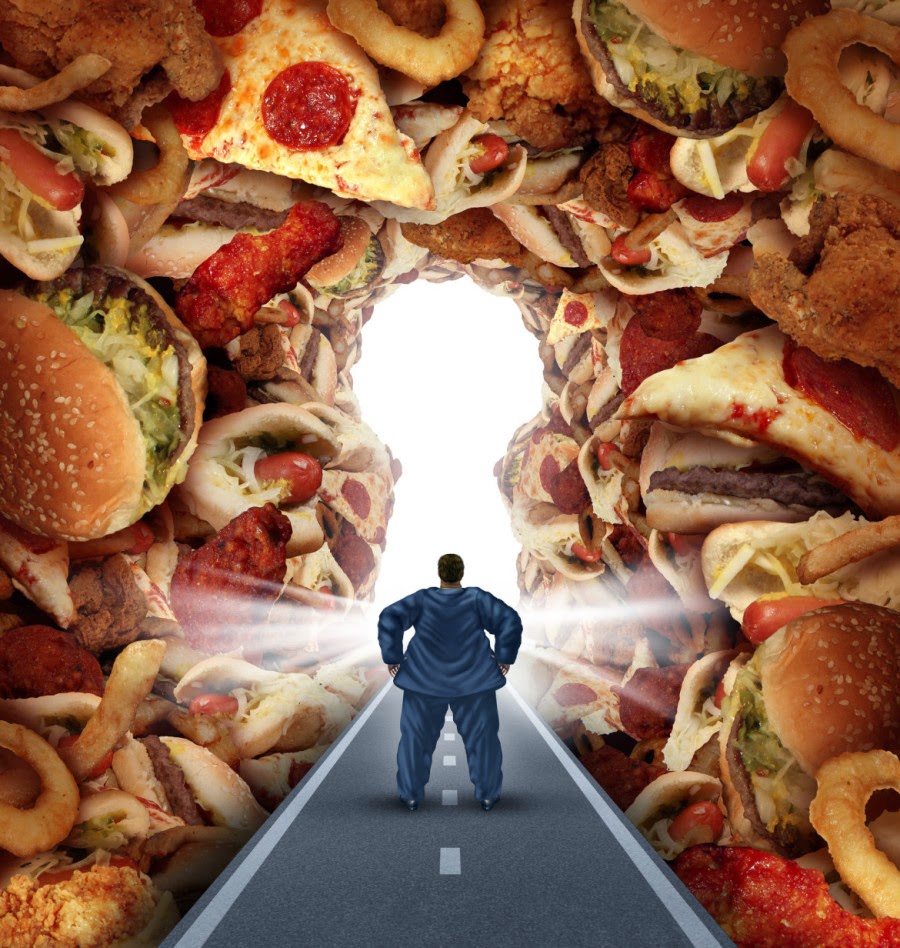
Why you should NEVER EAT JUNK FOOD AGAIN!

Why you should never eat processed foods again!!!

Resisting the urge to drink that soda pop or eat those chips can be tough, especially if you have grown accustomed to eating these highly addictive foods as part of your normal diet. But once you understand a little bit more about how these and other processed foods affect your mind, body, and even your soul, it becomes easier to make healthier food choices that enrich your being rather than sap it. Here are nine motivating reasons why you should cut processed foods from your diet for good:

1) Processed foods are highly addictive. Your body processes whole foods much differently than it does refined, processed, and heavily-modified "junk" foods. Processed foods tend to overstimulate the production of dopamine, also known as the "pleasure" neurotransmitter, which makes you crave them constantly. Your body ends up not being able to resist the temptation to continue eating junk foods in excess, which can lead to obesity and other health problems.

2) Processed foods often contain phosphates that destroy your organs, bones. Many processed foods contain phosphate additives that augment taste, texture, and shelf-life. But these additives are known to cause health problems like rapid aging, kidney deterioration and weak bones, according to the Rodale Institute, which makes foods that contain them far less attractive to those in the know.

3) Fresh foods are actually cheaper than processed foods. People with junk food addictions often claim that fresh, healthy foods are too expensive. But according to numerous studies and assessments, whole foods made from scratch end up costing less per serving than their unhealthy, processed equivalents. According to Rodale, a single serving of 100 percent organic chili made with fresh ingredients and grass-fed beef, for instance, is about 50 cents cheaper to make than buying a can of chemical-laden, microwaveable chili from the grocery store.

4) Processed foods cause chronic inflammation. One of the leading causes of chronic illness today is inflammation. And studies continue to show that refined sugars, processed flours, vegetable oils, and many other nasty ingredients commonly found in processed foods are largely responsible for this inflammation epidemic. So the next time your body craves a candy bar or a box of cheese crackers, consider the fact that heart disease, dementia, neurological problems, respiratory failure, and cancer have all been linked to the chronic inflammation caused by processed food consumption.

5) Processed foods ruin digestion. Because they have been stripped of their natural fibers, enzymes, vitamins, and other nutrients, processed foods tend to wreak havoc on the digestive tract. Chronic consumption of such foods can throw your internal ecosystem off balance, harming beneficial bacteria and exposing your system to infection. So you can basically think of those gummy bears and that piece of cake as literal poison for your system, which may help deter you from eating them.

6) Processed foods destroy your mind. If you suffer from chronic bouts of brain "fog," or have difficulty concentrating and thinking normally, chances are your diet has something to do with it. And a recent study out of Oxford University lends credence to this possibility, having found that junk food consumption can cause people to become angry and irritable. Nutrient-dense whole foods, on the other hand, can help level out your mood, sustain your energy levels, and leave you feeling calmer and more collected.

7) Processed foods are loaded with GMOs. The basic buildings blocks of most processed foods on the market today are derived from laboratories, not nature. Genetically-modified organisms (GMOs), which have been linked to infertility, organ damage, gastrointestinal disorders, and cancer, are prolific in processed foods. Excess consumption of these poisons promotes weight gain, acidifies your blood, and can even permanently alter the composition and function of your intestinal flora.

8) Processed foods are loaded with pesticides. In order to effectively grow the GMOs used in processed foods, conventional farmers have to apply Roundup (glyphosate) and other pesticides and herbicides, many of which end up in the final product. According to data compiled by Rodale, breakfast cereals alone have been found to contain up to 70 different types of pesticides, including warehouse fumigation chemicals and other residues.

9) Processed foods are not actually food. One of the ways you can assess the nutritional value of food is to see how animals, insects, bacteria, and fungi respond to it. Real foods will actually rot or grow mold, for instance, while fake, processed foods remain largely the same in appearance and shape no matter what their age. As we reported recently, processed food is essentially synthetic, and the industry that produces it admits that heavy tampering and crafty modifications are necessary to make it taste real, even though it is not.

I know it's so easy just to pop food into a Microwave or drive though a fast food line at McDonald's many of us use the excuse that we don't have time to cook.
Well let me ask you this,"Do you have time to deal with cancer, diabetes, high blood pressure or a host of other diseases caused by eating these toxic foods?"

In the long run these foods are VERY EXPENSIVE, they ruin your health, and you spend a fortune trying to fix the damage caused by eating the toxic foods.